MIS School Lunches: Recipe for Something Unappetizing
By Melek Z., Grade 10
For the last 3 years I have been attending MIS, the school hot lunches have been quite a debate among students. The simple topic of nourishment has become an issue over nutrition and taste – and the verdict from students is not flattering. Many complaints about the hot lunches rise, painting a picture of meals that many find unappetizing, questionable.
After asking a few senior school students about their opinion and we received a range of grievances.
“The food is okay sometimes, but sometimes it looks like throw up,” said Libby B., Grade 10.
Others in grade 10 have expressed their concerns regarding the unsettling qualities of certain meals.
“The pasta looks like it’s swimming in oil,” Libby added.
Charlotte, another Grade 10 student, echoed similar concerns, “There are a lot of random textures that shouldn’t be there…”
For others, the dislike was strong enough to just give up on school served meals entirely and resort to other means.
“I’m bringing my own lunch for a reason,” said Dora F., Grade 10, when asked what she thinks regarding this food issue.
“They made me actually sick. That’s why I bring my own packed lunch now,” shared Red B., Grade 10, after switching to home-brought lunches.


“It was… interesting, alright,” remarks Jade J., a Grade 10 student, after a few bites. (Melek Z./ Buchhof Bulletin)
The dish seemed to have potential but struggled to come together. The rice was unevenly cooked—some grains undercooked, others overcooked. The ‘curry’ itself leaned more toward a thick, undefined sauce. The carrots, while soft, might have benefited from a bit more texture. The meat was a bit of a puzzle—perhaps chicken, or beef, or something else? As for the greens, they could have used a touch more clarity; it wasn’t easy to tell whether they were spinach, kale, or another vegetable.
“It was interesting,” Jade concluded, but not in the way the chef might have hoped.
Now a drumroll for the most disturbing thing found in the school lunches…
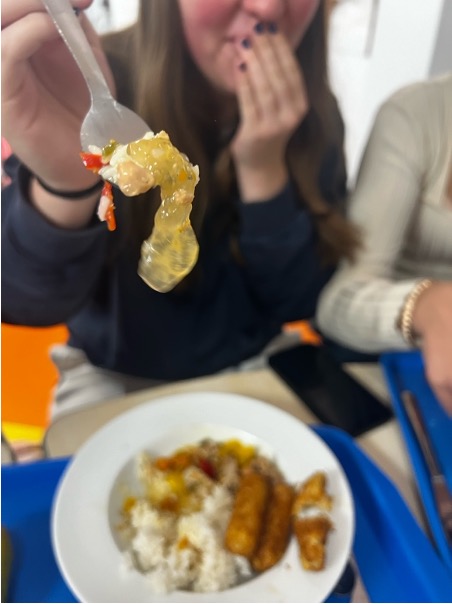
The gelatinous, unsettling concoction that emerged from a plate of undercooked rice and mushy fish sticks was a startling sight. The reaction from those at nearby tables made it clear that the dish’s appearance was far more unnerving in person than it might seem in a photograph. For those viewing this image, consider yourselves fortunate to experience it secondhand rather than it being shoved in your face by a dear friend.
Even as I write this article, looking at the photo brings back the scene with a wave of nausea. It’s hard not to wonder how such a result could come from otherwise simple ingredients. What kind of process could yield something so… unexpected?
This experience has left me both cautious and a little hesitant to trust another plate of food. While culinary experiments can sometimes be enjoyable, this particular encounter was one I will not be forgetting anytime soon.
All these endless complaints, but what can we do? A simple solution I would like to present in order to improve our school lunches could be to place a student-led feedback and suggestions box. A practical solution for the cafeteria and the company it has a contract with would be to focus on simple and consistent meal preparation instead of attempting new and different dishes every day. This way, the cafeteria staff can prioritize well-prepared and tasteful options that are less hard to get wrong – like a simple plate of pasta with tomato or cheese, rice bowls with clearly identifiable vegetables or basic sandwiches with fresh recognizable ingredients.
Additionally, perhaps it would be best to change their cooking techniques or take their time. For example, properly steaming vegetables to retain their flavor and intended texture or cooking rice with a timer for consistency. A standard process for preparing ingredients like meat and vegetables could prevent uneven and disturbing texture and mystery ingredients that have the students reeling back.
Lastly – despite this being a picky request – could work on their presentation of the food. Even small details like serving food in divided sections like they do for junior school kids to keep different meals separate could make the daily meals much more appetizing and appealing to students. These are realistic steps that take costs into consideration and could potentially lead to improvements.

Related Posts
Later Bells, Better Days? Is 9:05 a good starting time?

WHY IS EVERYONE TALKING ABOUT ICE?